SEO / AI SEARCH • March 2026 • 6 min read
GEO — The New SEO: How to Rank in AI Search in 2026
If you searched for something on Google recently, you probably noticed it: before any website links appear, Google gives you a full, conversational answer at the very top. That is an AI Overview — and it is changing everything about how businesses get found online.
Welcome to the era of Generative Engine Optimization, or GEO. It is the most important shift in search marketing since Google first introduced page rankings in the late 1990s. And if your business is still playing the old SEO game — stuffing keywords and chasing backlinks — you are already falling behind.
What Exactly Is GEO?
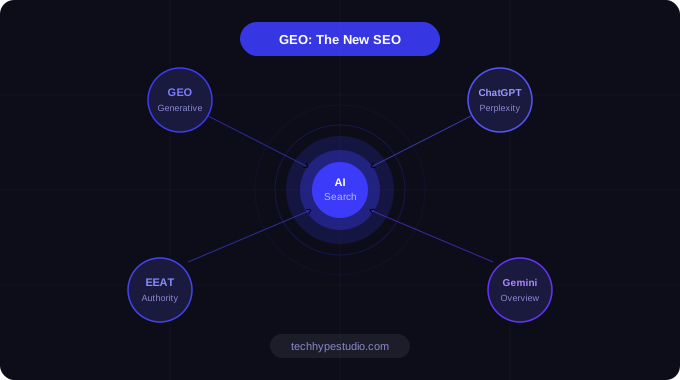
Traditional SEO was about getting your website to rank on page one of Google. You optimized for keywords, built links, and hoped people clicked your blue link. GEO is different. It is about getting your brand, your content, and your expertise cited inside AI-generated answers — in Google’s AI Overviews, ChatGPT, Perplexity, and other AI search tools.
Think of it this way: instead of trying to be on the first page, you are now trying to be the source that AI systems trust and quote when someone asks a question in your industry.
💡 Research from TheeDigital (2026) shows that AI-driven research influences 9.7% of B2B revenue — and that number is growing fast. Businesses that appear in AI summaries see significantly higher conversion intent from the traffic they do receive.
Why Is This Happening Now?
Consumer search behavior has fundamentally changed. People are no longer just typing keywords — they are asking full questions and expecting complete answers. Tools like ChatGPT, Google Gemini, and Perplexity have trained users to expect conversational, intelligent responses rather than a list of links to click through.
According to Google, 83% of global consumers use Google and/or YouTube daily — and AI Mode is now transforming the search bar into what Google calls a ‘creative canvas.’ People expect AI to understand what they mean, not just what they type.
5 Ways to Optimize for GEO Right Now
- Write content that directly answers questions. Use FAQ-style sections, clear headings, and concise summaries that AI can easily extract and cite.
- Build topical authority. AI systems reward brands that cover a topic deeply and consistently — not one-off articles. Create pillar pages supported by multiple related posts.
- Focus on EEAT — Experience, Expertise, Authoritativeness, and Trustworthiness. Include author bios, cite credible sources, and publish data-backed content.
- Use structured data (Schema markup) on your website. This helps AI systems understand exactly what your content is about.
- Create content for multiple platforms. AI tools pull from a wide ecosystem — your blog, social media, press mentions, and third-party reviews all contribute to your GEO authority.
What This Means for Your Business
The businesses that will win in 2026 are the ones that stop thinking of content as a keyword exercise and start thinking of it as a trust-building exercise. AI systems are essentially asking: ‘Is this brand a genuine authority on this topic? Can I trust what they say?’ Your content strategy needs to answer yes.
At TechHypeStudio, we have already shifted our SEO service to include full GEO optimization — helping our clients build the content ecosystems and authority signals that get them cited by AI, not just ranked by algorithms.
💡 Bottom line: If you are not optimizing for AI search in 2026, you are optimizing for a search landscape that is already disappearing. Let’s talk about your GEO strategy.